7 min read
Eye Color Personality Chart: Meanings for Brown, Blue, Green, Hazel, Gray, and Amber Eyes
Use this eye color personality chart to compare the most common meanings linked to each eye color, along with a reality check on what those labels actually mean.

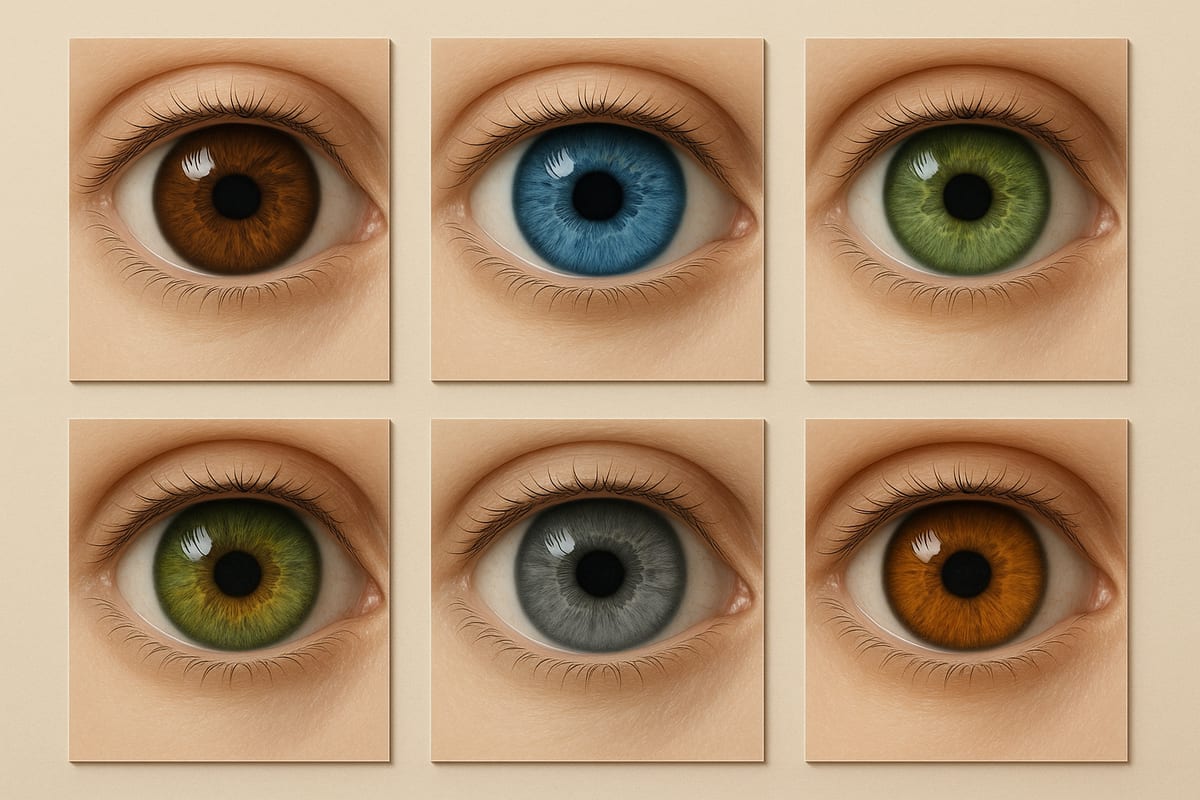
Quick Eye Color Personality Chart
Brown eyes are usually linked with warmth and dependability. Blue eyes are often linked with calmness and openness. Green eyes are typically described as intense or magnetic.
Hazel eyes are often called adaptable, gray eyes are associated with balance or mystery, and amber eyes are framed as bold or uncommon. These are popular meanings, not scientific classifications.
How to Read an Eye Color Chart the Right Way
Most charts compress a complicated topic into a few catchy words. That makes them easy to scan, but it also means they blur the line between cultural symbolism and evidence.
Use a chart as a conversation starter, not as a personality diagnosis. The most helpful part is often how it highlights visual differences between eye colors and undertones.
Brown and Blue Eyes on Personality Charts
Brown eyes usually get labels like loyal, grounded, practical, or comforting. Blue eyes tend to get labels like calm, honest, reflective, or striking.
Those patterns usually reflect familiarity and visual contrast. Brown eyes are globally common and can read as warm, while blue eyes catch light strongly and stand out in photos.
Green, Hazel, Gray, and Amber on Personality Charts
Green eyes often appear in chart lists as mysterious, creative, or confident. Hazel eyes are commonly described as dynamic because they can shift between green, brown, and gold tones.
Gray eyes are usually framed as balanced or unreadable, while amber eyes get words like bold, wild, or unforgettable. Rarity drives much of that language.
Why These Meanings Feel So Personal
People often recognize themselves in broad descriptions, especially when the wording is flattering. That is one reason personality charts keep performing well in search and social media.
Eye color also affects styling, contrast, and facial emphasis, which can change how someone is perceived. Readers may be responding to appearance cues more than personality itself.
A Better Use for Eye Color Analysis
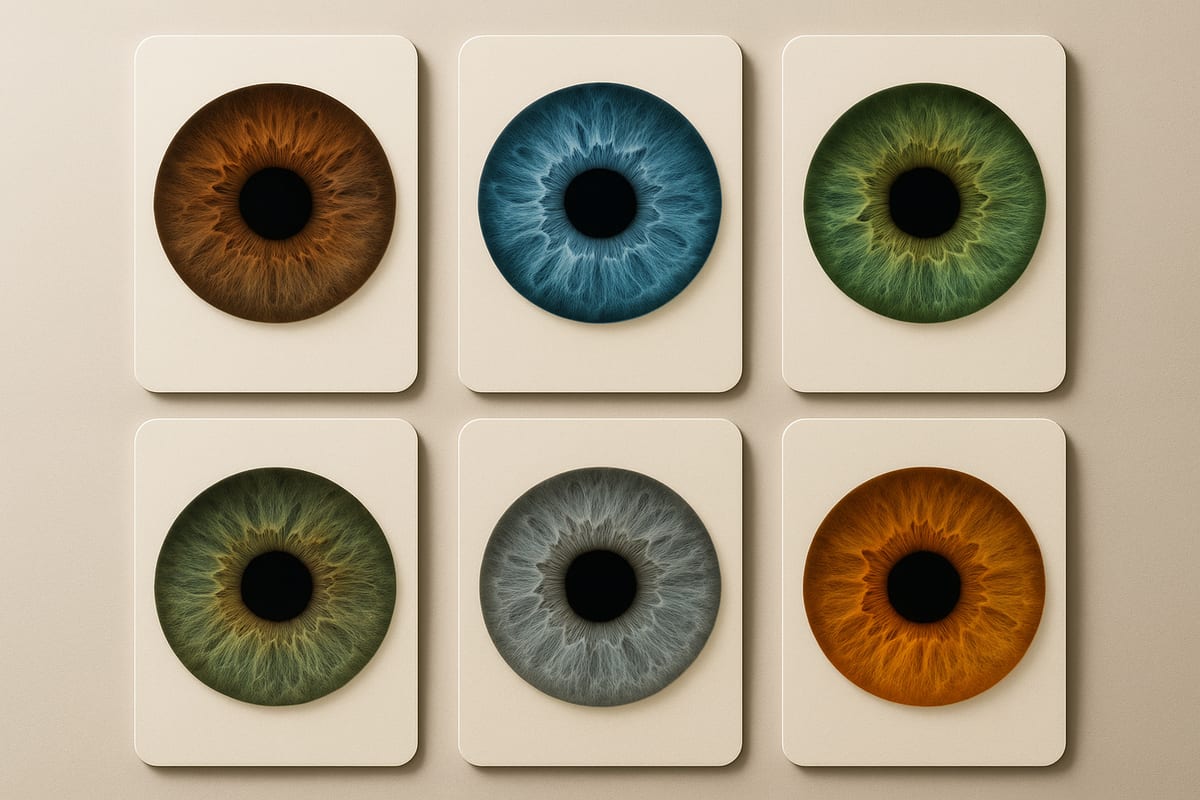
If you want something more practical than a chart, look at your real iris mix, outer ring, and secondary tones. Hazel, amber, blue-gray, and dark brown eyes often contain more variation than simple labels suggest.
That kind of analysis is useful for makeup, color matching, and understanding why your eyes seem to change across lighting conditions.
Article FAQs
Is an eye color personality chart scientifically accurate?
No. It is better understood as a summary of popular beliefs and first-impression language than as a scientific personality tool.
Why do hazel eyes get different personality meanings?
Hazel eyes change appearance in different lighting and often contain multiple tones, so people tend to describe them as adaptable, mixed, or hard to define.
What should I look at instead of personality labels?
Look at undertones, iris patterns, rarity, and contrast. Those are the details that better explain how your eyes actually look and why they stand out.
Related Articles
- Eye Color Change Surgery: Everything You Need to Know
- Black Eye Color: Do True Black Eyes Exist?
- What Your Eye Color Says About You: Popular Meanings, Myths, and Patterns
- Rare Eye Color Celebrities: Famous Faces Often Noted for Green, Gray, Hazel, Amber, or Unusual Eyes
- Celebrity Eye Color List: Famous People Grouped by Brown, Blue, Green, Hazel, Gray, and More
- Eye Color Beauty Ranking: Which Eye Colors Are Most Admired and Why?
- Rarest Eye Color: What Is the Rarest Eye Color in the World?
- Eye Color Rarity Chart: Global Percentages for Brown, Blue, Hazel, Green, Gray, and Amber Eyes
- How Rare Are Green Eyes? Global Percentage, Genetics, and Why They Stand Out
- How Rare Are Blue Eyes? Global Percentage and What Makes Them So Recognizable
- How Rare Are Hazel Eyes? Percentage, Definition, and Why They Are Hard to Classify
- How Rare Are Grey Eyes? Percentage, Eye Color Science, and Why They Are Often Misread
- How Rare Are Amber Eyes? Global Estimates and What Makes True Amber Different
- How Rare Are Brown Eyes? Why the Most Common Eye Color Still Has More Variety Than People Expect
- Most Common Eye Color: The Global Answer and Why Brown Eyes Dominate
- Rarest Eye Colors in the World: How Green, Gray, Amber, and Other Unusual Eyes Compare
- Rare Eye Colors List: A Practical Ranking from Green and Gray to Amber and Beyond
Want To Analyze Your Own Eyes?
Use Eye Color Analyzer to scan your iris, reveal hidden undertones, and get your rarity score in seconds.